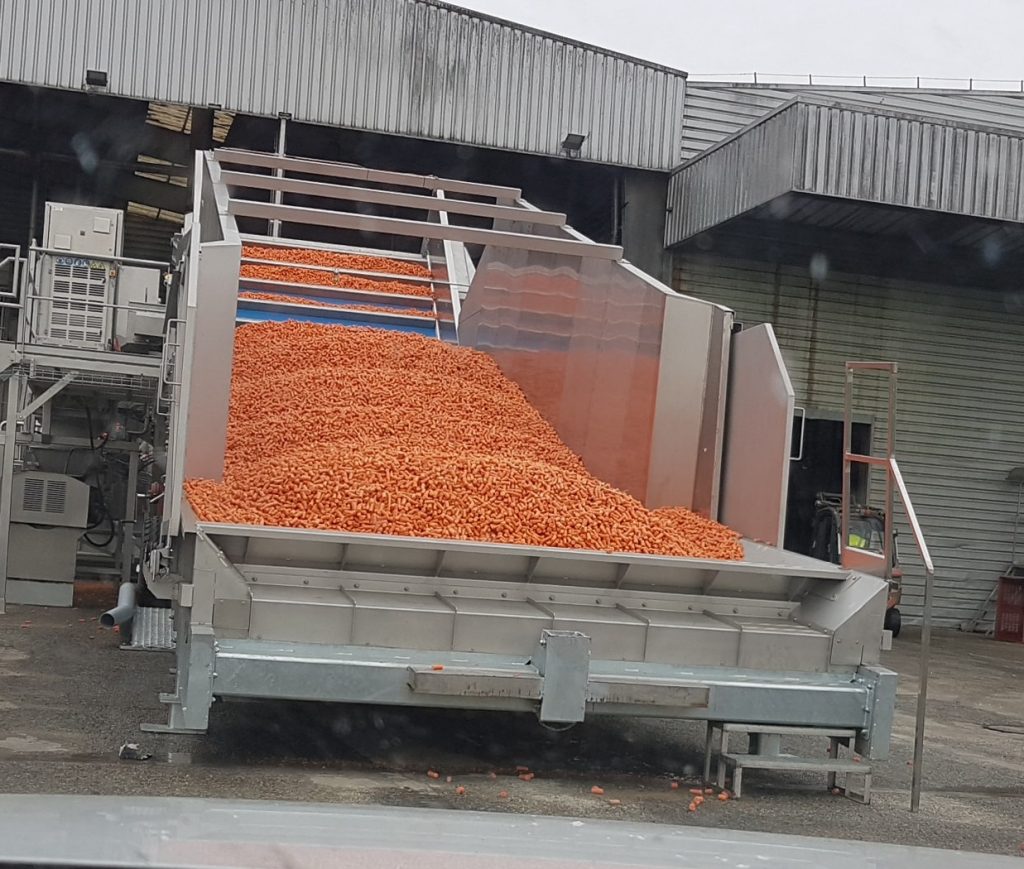
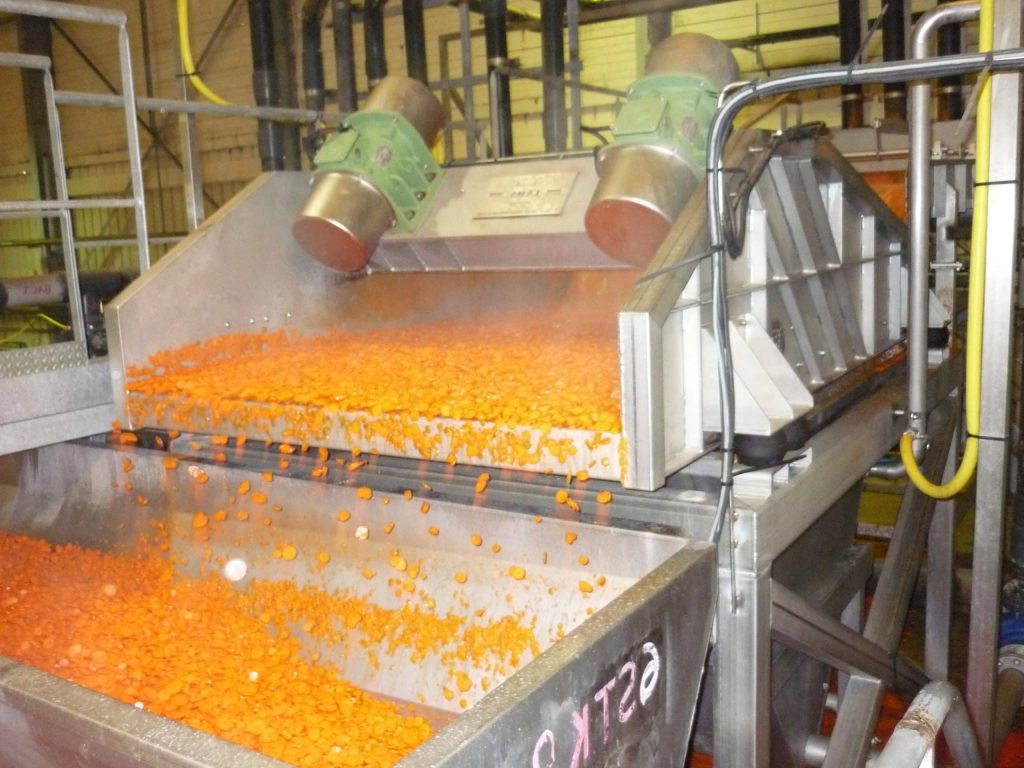
Machines designed for washing spinach and removing heavy, organic foreign bodies (frogs, toads, mice), as well as stones, pieces of metal and clods of earth. It also traps small floating debris (aphids, larvae, twigs, etc.) using special drums.
Key features of the aerated spinach washer
| Component | Role |
|---|---|
| Pyramidal cone tanks | Efficient decantation of heavy bodies, large volume of water for washing. |
| Sequential purging | Waste removal via valve and inspection door. |
| Rotary harrows | Controlling the progress of leaves on the surface. |
| Rotary drums | Trapping floating debris (aphids, larvae, twigs). |
| Spray boom | Final cleaning on the exit conveyor. |
| Extraction mat | Drain and separate washed spinach (perforated mesh). |
| Motor pump circuit | Water recycling, filtration, decantation of organic matter. |
| Air circuit | Stirring the product, keeping it on the surface, restarting when the tank is full. |
Benefits
- High capacity Up to 14 tonnes/hour for spinach.
- Complete elimination Heavy foreign bodies (metal, earth, animals) and light foreign bodies (organic debris).
- Water saving : Integrated recycling and filtration.
- Adaptability Several versions of extraction belt available.
Typical applications
- Food industry Washing leafy vegetables (spinach, lettuce, etc.).
- Compliance with health standards Elimination of contaminants before processing or packaging.
- Optimising production lines Upstream integration of packaging lines.
Points to check before buying
- Compatibility Suitability for the type of product to be washed (size, fragility, flow rate).
- Maintenance Frequency of cleaning of tanks, drums and filters.
- Consumables Cost and service life of perforated mats, wear parts.